 Search Tips
How do I create a Scene on the apps?
Things to remember about Scenes:
-
A Scene can perform only one set of simultaneous actions, but those actions can operate multiple devices. For example: You can create a scene that turns on multiple lights in your home and raises the thermostat.However...
-
To undo the changes made when the scene runs, a separate scene is required to reset those changes. In other words, a separate scene is needed to turn off lights that were turned on by the first scene or re-lock doors that were unlocked by the first scene, etc.
-
Scenes send specific commands to your devices. For example, if a light switch in your system is already on when it receives the command "Turn On", nothing will happen. In other words, that switch will not mindlessly toggle to its Off state. Devices that are compatible with
Scenes can be started or triggered in three ways which are explained below. This example shows creation of a clock and calendar-controlled scene.
NOTE: The screens and configurations discussed in this article will vary with your mobile device and the services and hardware in your system.
These illustrations are taken from the iOS version of the app. The steps are similar on Android.
If you have an account with more than one Location:
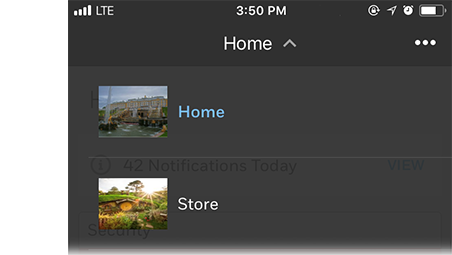
Before you do anything else, make sure to select the Location where you want to use the Scene you're creating.
1. Touch Scenes  on the navigation bar at the bottom of the Home screen.
on the navigation bar at the bottom of the Home screen.See the notes at the end of this article for what to do if you can't find the icon you want on the navigation bar.
-
On Android, touch SCENES near the top of the screen
2. A screen opens displaying a list of any existing scenes and the option to create a new one.
3. Touch CREATE SCENE.
4. On the next screen, name the scene and touch next at bottom right on the iOS keypad.
See the notes at the end of this article for a couple of suggestions about naming Scenes.
5. Next, choose the type of trigger that will start the scene:
-
During this time: This will open a page of clock/calendar settings so you can choose the exact day and time the scene runs. Remember that each time/date-based scene only initiates a single action, starting at a specific time/date. You will be setting a start time, not a start time and an end time.
-
Triggered by a device:Choose this option if you want the scene to be triggered by a change in the state of another piece of hardware in your system, like the security system being disarmed
-
Manually activate: This kind of scene is handy for actions like turning off all the lights when you're ready to start a movie night, for example.
NOTE that any scene can be started manually, notwithstanding the type of trigger you select; see the FAQ How do I manage and modify Scenes in the app?
6. After making your settings, touch SAVE SCENE.
7. The next screen displays all the settings in your scene.
8. On the summary screen, verify your settings. Touch the  icon to make any changes (Edit) or Delete the scene or put the scene On Hold.
icon to make any changes (Edit) or Delete the scene or put the scene On Hold.NOTES
-
iOS: If the Scenes icon isn't present on the navigation bar, touch the
 button. This will open a settings screen where you'll find Scenes at the top of the page.
-
If a feature icon you're looking for isn't on the bottom navigation bar, you can set it to appear there. See the FAQ What if the feature I want isn't at the bottom of the screen? (iOS Navigation Order)
-
-
It's a good idea to give your scenes simple, meaningful names.For example, in an emergency, you don't want to be on the phone with the babysitter, struggling to explain a jokey name you've given to the lights on the patio.
-
Scenes on the website are grouped by the type of trigger that starts them. Within these categories, they're listed alphabetically. Entries beginning with numbers follow those listed alphabetically.
-
You can take advantage of the way numbering is handled to make life a little easier. Let's say you've created two scenes that you naturally think of together:
-
One is Evening ON, which turns on exterior lights at Sunset on weekdays.
-
The other is Morning OFF, which turns off those lights at Sunrise.If it makes you crazy that they are alphabetically listed like this by default...
 ...You can begin a scene's name with a numerical character to make the displayed list clearer:
-